
The Future Pioneered by ENEOS: Advanced Projects & Procurement Management in the ENEOS Group
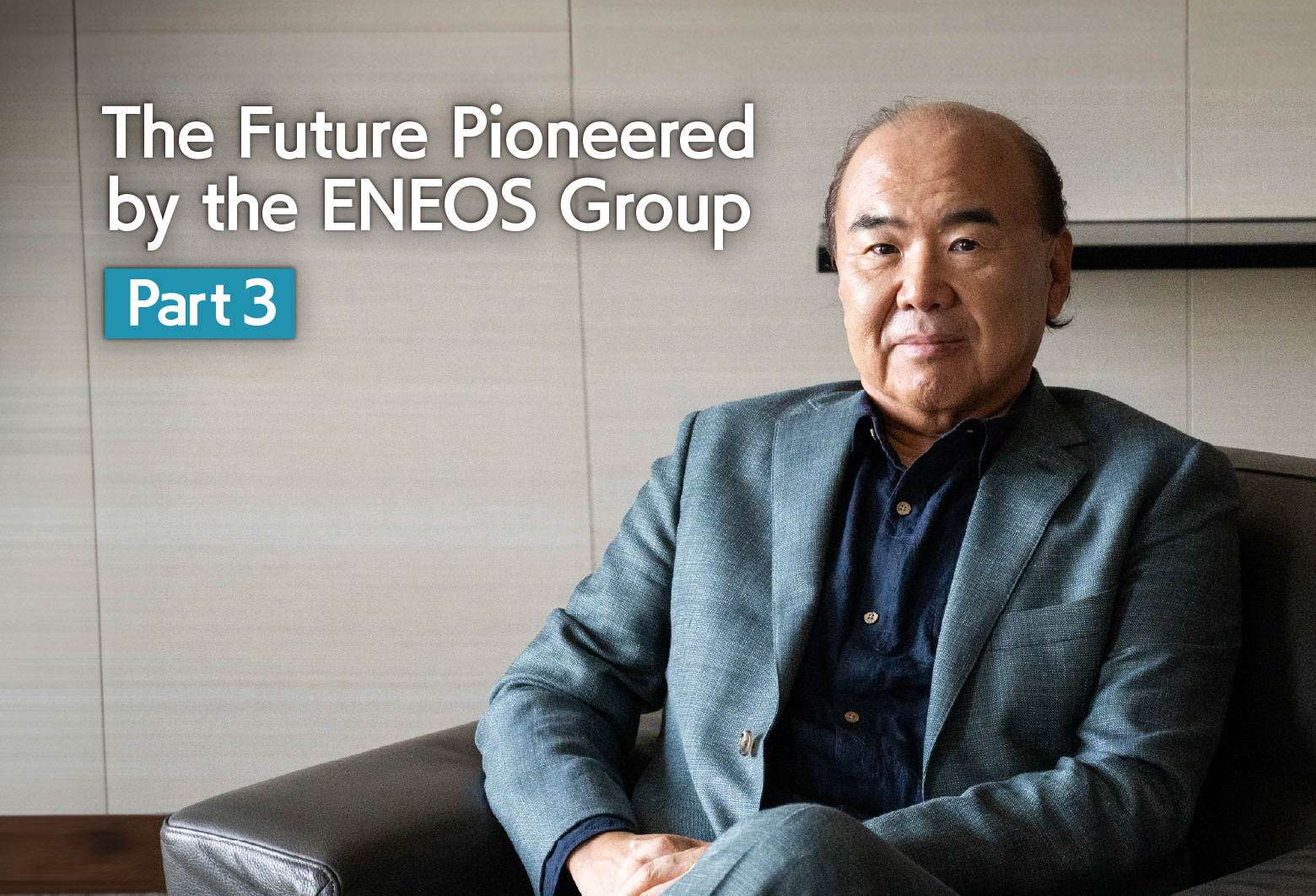
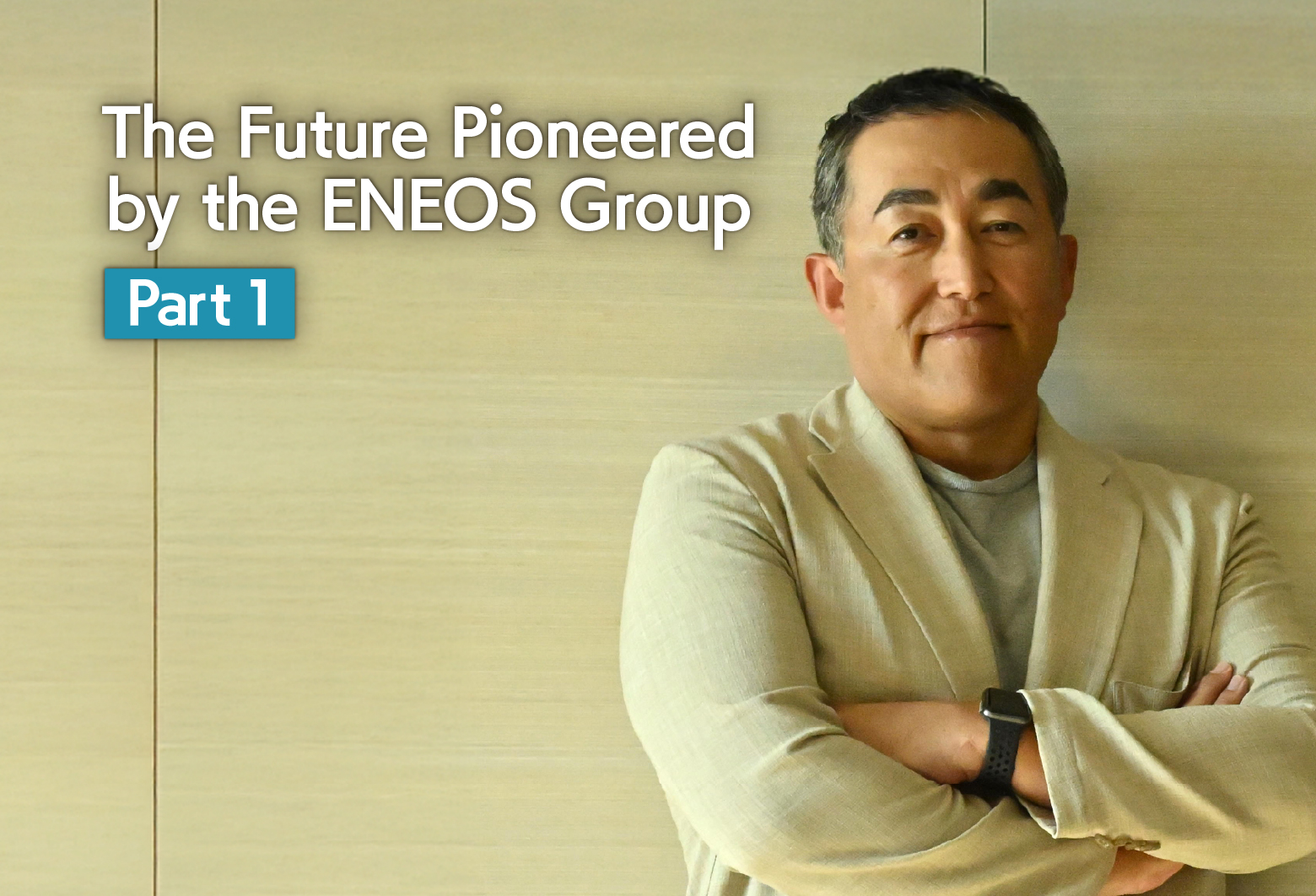
The ENEOS Group is working to quickly improve investment efficiency as it aims to transform its management into a leaner structure capable of flexibly adapting to a non-continuous business environment. It is accelerating investments in large-scale energy plants and other projects, while also rigorously verifying the profitability of these projects and reconsidering less efficient ones. In this three-part series, we asked Someya Yoshiyuki, Chief Project and Procurement Officer (CPPO) who spearheads project management and procurement, about the advancement of Group-wide management, including the project gate system and procurement networks.
Part 3: Expanding Project Management Possibilities Through the Gate System
Establishing a project network to build an organizational structure that enables continuous improvement; Sharing expertise and specialized human resources
――This time, we’d like to discuss the future of projects and procurement within the ENEOS Group. How do you intend to transform the Group’s projects and procurement through the project governance and procurement network that you described in Part 2?
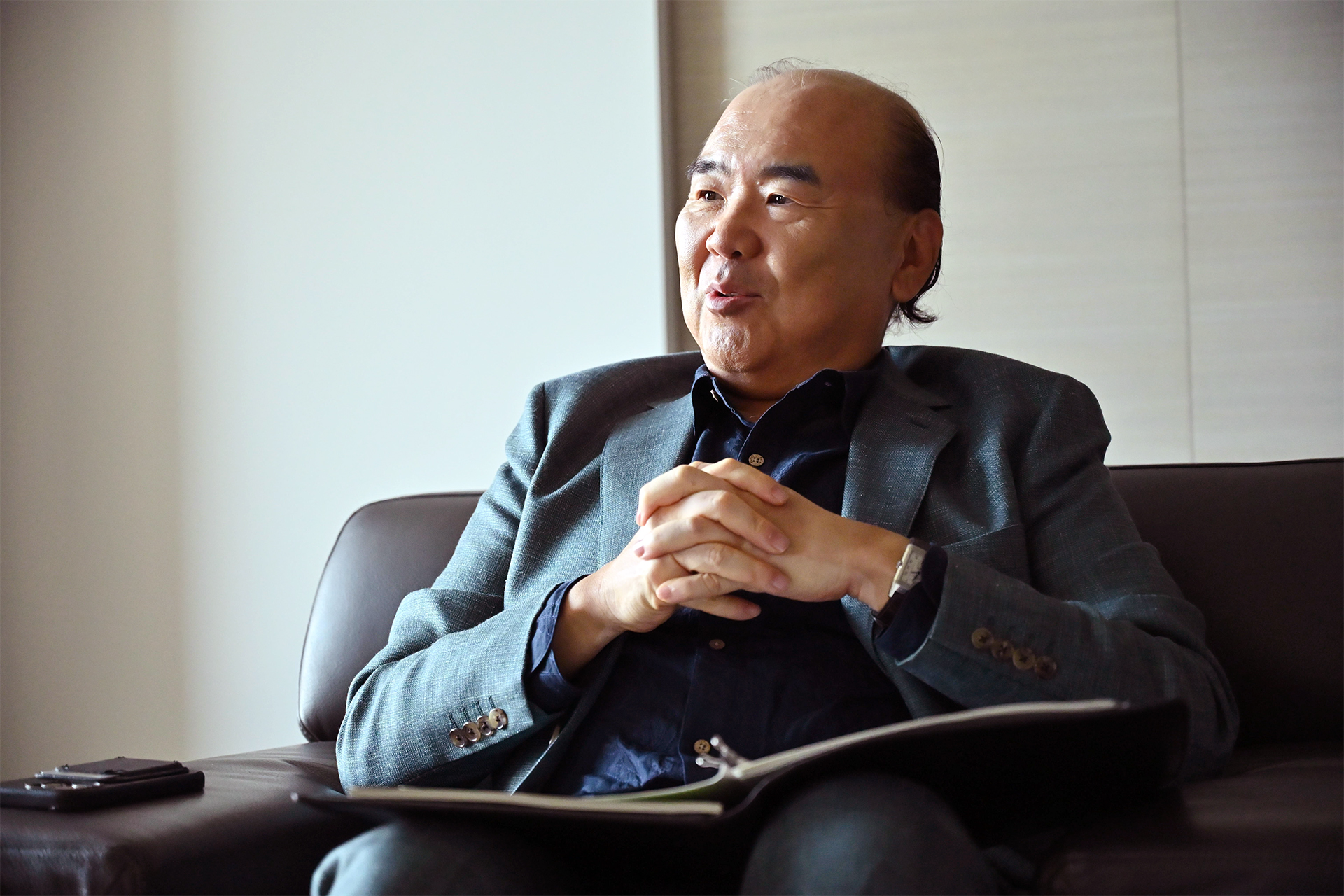
Someya: Our immediate major goal is to improve investment efficiency. We must steadily implement initiatives that generate returns on investment, increase earnings, and ensure our shareholders understand this progress. Taking projects as an example, reducing costs and completing them early both contribute to improving investment efficiency. There are various approaches, but what I intend to focus on going forward is appropriately selecting necessary projects using the gate system and avoid investing in those with low efficiency. To achieve this, we must ensure the gate system functions effectively to select high-quality projects and, once a project is approved, complete it according to schedule to secure the anticipated earnings. We must also thoroughly calculate and pay out appropriate project costs, and make these costs visible. This is a crucial activity supporting the CFO’s goal of making management visible. Furthermore, we will pursue opportunities to reduce project costs and complete projects within budget. Continuing to implement these diligent efforts should allow us to improve the internal rate of return (IRR). What I have just described is the goal for the Group’s project management, and my role is to ensure we can effectively measure its impact. In terms of procurement, we discussed procurement governance and strategic procurement in Part 2, and optimizing these is our immediate objective. For procurement governance, we will thoroughly implement procurement activities based on the ENEOS Group Code of Conduct. We will standardize procurement policies and activities to conduct procurement efficiently as a Group and reduce costs. Regarding strategic procurement, we are aiming to increase earnings across the entire Group by sharing a variety of information to reduce labor, and by implementing best practices to procure good quality items at fair prices.
――You are also advancing the use of IT and data analysis towards that goal.
Someya: That’s right. For example, managing expenditures in large-scale projects can be quite challenging, but our core internal system, CoMPASS, now allows us to instantly see when, where, and how much money was spent. I believe that the use of such technology will help streamline project management significantly going forward. In terms of data utilization, we set key performance indicators (KPIs) and digitize data such as the Procurement Department’s contribution to cost reduction, purchase records, and bid rates, so that we can extract the necessary data.
――We discussed CSR procurement in Part 2. For companies like the ENEOS Group with large supply chains, it must also be necessary to address environmental impacts and human rights issues further downstream, correct?
Someya: We are currently implementing a process to verify that the downstream products and services we purchase do not negatively impact the global environment or violate workers’ human rights. Some foreign-affiliated global companies conduct on-site inspections even further downstream in their supply chains or use only recycled materials. The ENEOS Group verifies that there are no environmental impacts or human rights violations exceeding the standards outlined in each company’s supplier procurement guidelines. At the same time, we conduct surveys with our suppliers to jointly evaluate improvement methods and also provide educational materials. I believe that it is important to steadily continue these initiatives.
――So you are contributing to the Group’s management from both financial and non-financial perspectives—enhancing profitability and aligning with the SDGs. You’ve also established a project network.
Someya: Yes, that’s right. When building a cross-group network, I think it’s comparatively easier when people are doing similar work even if they’re in different departments, but that’s difficult with projects. That’s because the driving force and the management team exist in separate departments at each company, and we need to consolidate them into one team. Therefore, I’ve been visiting our major operating companies alongside the people in charge, gathering together those with decision-making authority at each company to establish a network. Within this network, we discuss areas for improvement in the gate system, verify aspects that aren’t being thoroughly implemented, and share challenges that arise during implementation. If we start by creating such a forum and foster collaboration among the companies, the system we have will steadily improve in a positive direction. Our goal is to build an organizational structure capable of continuous improvement. Wouldn’t it also be convenient if we could get advice and insights from each company through the network when we want to enhance the quality of the project? Currently, we don’t fully know the kinds of specialists that exist within the Group. I hope that in the future, the network can become a sort of brain trust for Group projects, leading not only to sharing know-how but also to sharing human resources.
――It seems likely that this will go beyond mere networking to foster sharing and passing on knowledge.
Someya: In fact, we are facing an urgent issue regarding project resources. Since there have been almost no major projects carried out in Japan for over 20 years, those with experience in large-scale projects within the ENEOS Group are primarily in their 50s and older. Once this generation retires, we will have to execute projects with only inexperienced human resources. This challenge isn’t unique to the ENEOS Group; contractors are facing it as well. In my own 15 or so years working on projects, I once encountered a major project where the budget was exceeded and the timeline was significantly behind, but I flew to the site and managed to bring both costs and schedule back on track. Being thrown in alone and fighting a lonely battle was incredibly tough, but the fact that I pulled it off gave me not just experience but also confidence, which has become a major source of strength for me today. Projects where such experience is vital tend to concentrate on specific individuals, creating a dilemma where it is difficult to develop successors. It would be great if we could pass on the ENEOS Group’s project legacy through our network so that we can effectively manage work and develop people within the Group. It takes time and money to develop specialized human resources, so it’s meaningful for the entire Group to work together on this.
――Finally, what would you like to focus on to achieve the various new initiatives we discussed?
Someya: No matter how robust our systems and networks become, they remain merely tools. It is people who master these tools to achieve our goals. When systems are not understood or accepted, it only breeds a sense of forced compliance. We are currently conducting training within the Group on new initiatives, but some employees may still have questions that training alone cannot address. It is essential to have direct conversations to explain the nuances that cannot be fully captured in writing. I intend to communicate directly with all employees as needed.


Related Posts
A leader in the energy industry, ENEOS is also at the forefront of the industry in utilizing artificial intelligence (AI), achieving the world’s first automated operation of a crude oil processing unit at the Kawasaki Refinery in 2024. ENEOS is strengthening four driving forces—(1) data utilization, (2) digital technology capabilities, (3) digital and IT personnel, and (4) security—to seek “Tomorrow’s Normal with AI” that achieves operational transformation and value creation. In this three-part series, we asked Tanaka Tsukasa, leader of ENEOS’s digital strategy and General Manager of IT Planning & Development Department, about the current state of AI utilization and “tomorrow’s normal.”
A leader in the energy industry, ENEOS is also at the forefront of the industry in utilizing artificial intelligence (AI), achieving the world’s first automated operation of a crude oil processing unit at the Kawasaki Refinery in 2024. ENEOS is strengthening four driving forces—(1) data utilization, (2) digital technology capabilities, (3) digital and IT personnel, and (4) security—to seek “Tomorrow’s Normal with AI” that achieves operational transformation and value creation. In this three-part series, we asked Tanaka Tsukasa, leader of ENEOS’s digital strategy and General Manager of IT Planning & Development Department, about the current state of AI utilization and “tomorrow’s normal.”
A leader in the energy industry, ENEOS is also at the forefront of the industry in utilizing artificial intelligence (AI), achieving the world’s first automated operation of a crude oil processing unit at the Kawasaki Refinery in May 2024. ENEOS is strengthening four driving forces—(1) data utilization, (2) digital technology capabilities, (3) digital and IT personnel, and (4) security—to seek “Tomorrow’s Normal with AI” that achieves operational transformation and value creation. In this three-part series, we asked Tanaka Tsukasa, leader of ENEOS’s digital strategy and General Manager of IT Planning & Development Department, about the current state of AI utilization and “tomorrow’s normal.”