
Coexistence of Refineries and Nature: Biodiversity Conservation Initiatives at the ENEOS Group

Energy supports our lives.
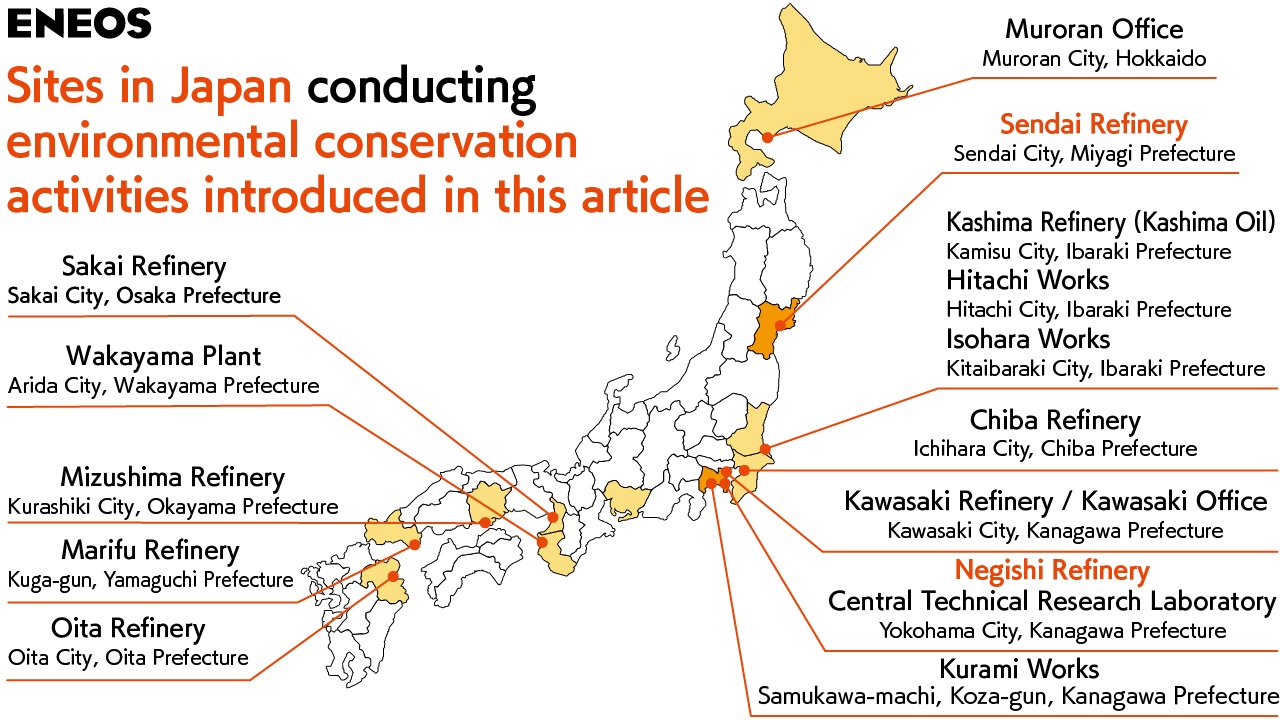
Refineries, which supply energy, cannot usually be entered by outsiders. However, do you know that there are actually rich natural environments growing within these industrial facilities? More than 150 species of wildlife have been found at the Negishi Refinery in Yokohama City, and rare plants bloom. At the Sendai Refinery, reconstructed after the Great East Japan Earthquake, Japanese raccoon dogs and foxes can be seen roaming through the green areas. Such scenes are the results of biodiversity conservation initiatives being undertaken by the ENEOS Group at refineries across Japan. We take a look at the environmental conservation initiatives being implemented within refineries that can’t usually be seen in our daily life as well as their significance to local ecosystems and our lives.
Contents
Our Initiatives for Biodiversity
The ENEOS Group Code of Conduct states, “We recognize that we are stewards of the environment and its limited resources. We strive to conserve biodiversity and natural capital, including, but not limited to, water, soil, and the atmosphere, and contribute to the development of a sustainable society.” Accordingly, we ascertain and analyze the impacts of our business activities on biodiversity and strive to make improvements. We are also implementing initiatives that contribute to biodiversity conservation, such as nature protection and environmental education.
We actively participate in domestic and overseas environmental conservation initiatives and also endorse the Keidanren Declaration for Biodiversity and Guideline formulated by Keidanren (Japan Business Federation). This declaration promises that companies will respect the natural environment and work toward the conservation and sustainable use of biodiversity, and the ENEOS Group implements environmental conservation initiatives based on this guideline.
Since 2022, we have also been participating in the 30by30 Alliance for Biodiversity (international target to conserve or protect 30% of land and sea areas by 2030)

Out of the ENEOS Group’s initiatives being conducted based on the Code of Conduct, we will look at pioneering biodiversity conservation initiatives being undertaken at the Negishi Refinery and the Sendai Refinery. Located in coastal petrochemical industrial complexes, these refineries foster rich natural environments and serve as key components of local ecosystem networks, which embodies the ENEOS Group’s environmental philosophy in tangible form.
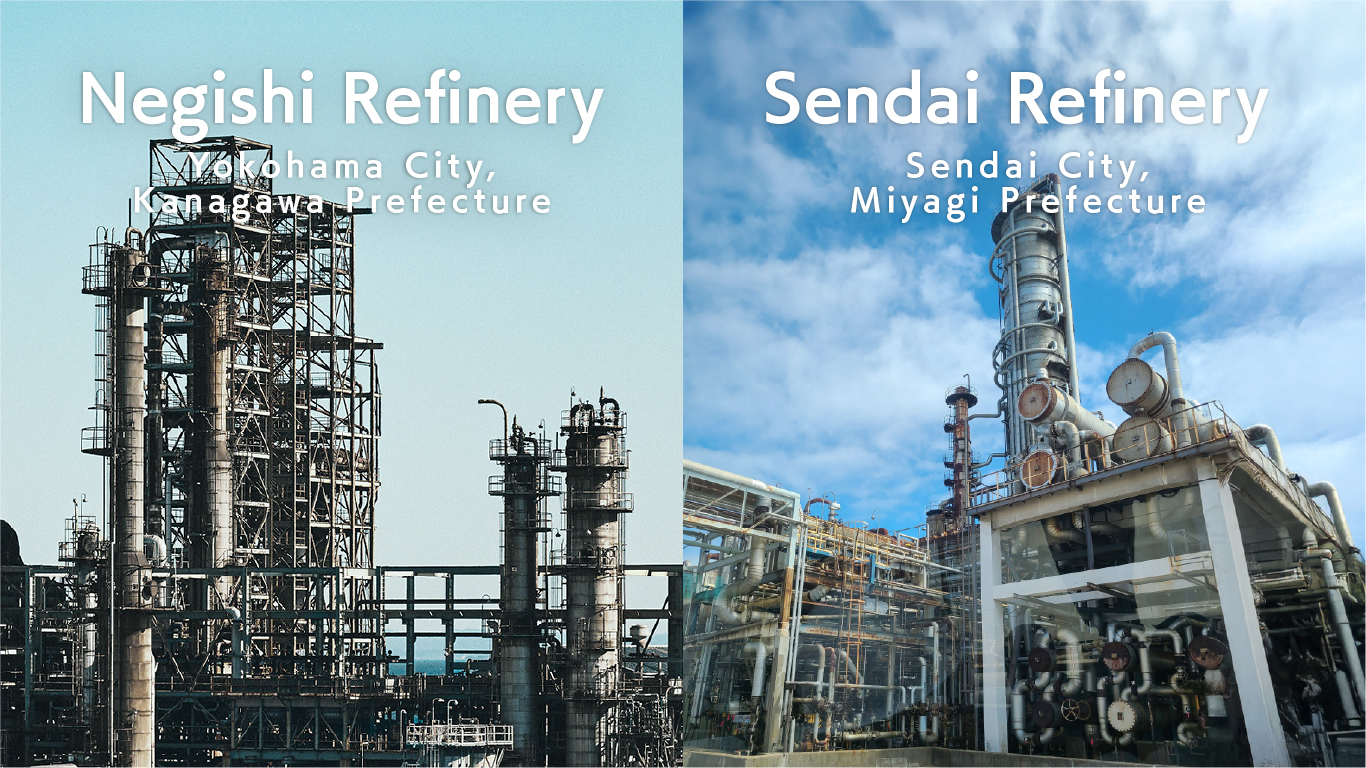
Formation of an Ecological Network at the Negishi Refinery
Green Oasis in the Middle of the City
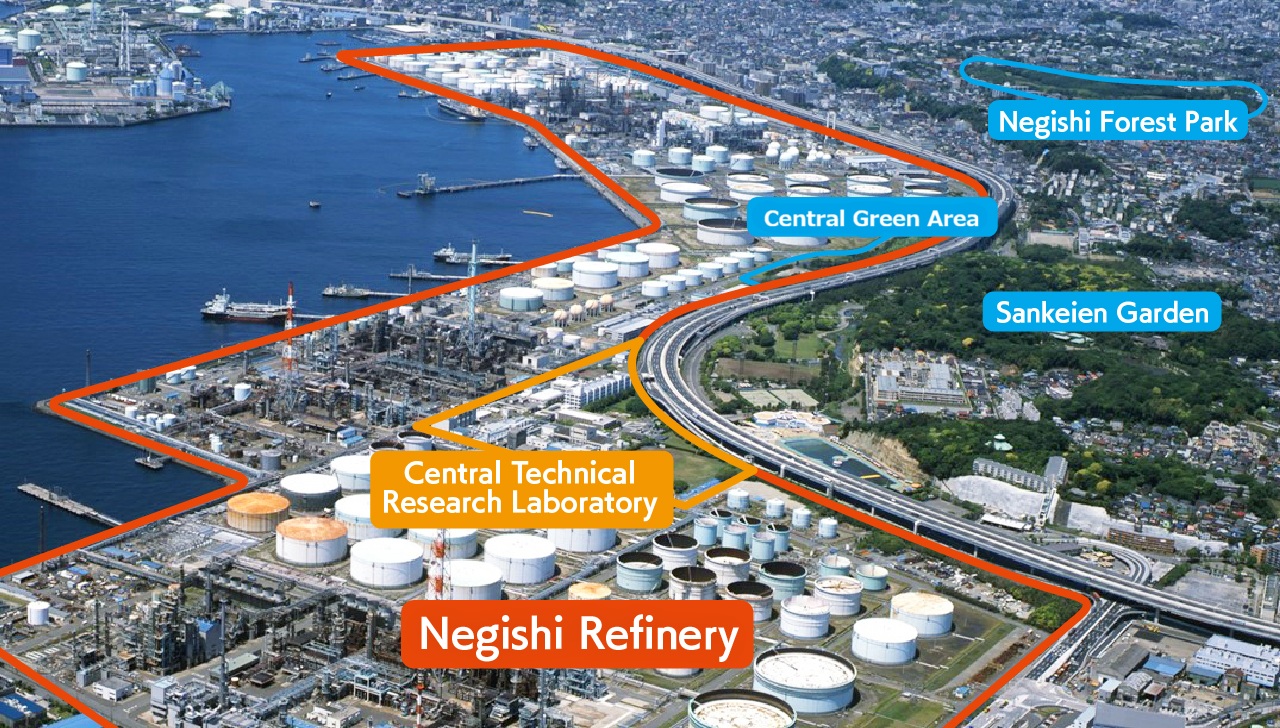
Located in Yokohama City, the Negishi Refinery has vast premises spanning approximately 2.2 million square meters (around 308 times the size of a standard soccer field). Within this vast premises lies a central green area of 60,000 square meters with three ponds. This area has been developed and sustained as a satoyama-a traditional Japanese landscape that harmonizes nature and human activity-spread among the premises facing Tokyo Bay. It is also adjacent to local green areas such as Sankeien Garden—a famous Japanese garden—and Negishi Forest Park.
Negishi Refinery (in Japanese)
Environmental Conservation Initiatives in Partnership with Local Communities
-
Ecological Network Linking Local Greenery
The green areas at the Negishi Refinery do not exist alone. We connect them to nearby green areas to form a network that links wildlife corridors and habitats. This "ecological network" helps sustain an environment where diverse flora and fauna can live even in an urban area. Since 2016, the refinery has been managing its existing woodlands— including thinning and weeding—based on satoyama management practices, a traditional Japanese approach that maintains harmony between people and nature. It is also implementing a program to create “satoyama within the refinery,” aiming to revitalize part of the green area. Today, despite being an industrial facility in an urban area, more than 150 species of wildlife have been observed. Notably, the area now provides an ideal environment for rare plant species such as Kinran (Cephalanthera falcata), Kugenumaran (Cephalanthera longifolia), Urashimaso (Arisaema urashima), and Musashi-abumi (Arisaema ringens).
- ENE-Mori Fair for Fun Learning
Since 2024, the Negishi Refinery has been conducting ENE-Mori Fair, an environmental learning event for local residents. Planned in collaboration with Yokohama City University, this event is filled with programs that can be enjoyed by both children and adults.
・Exploration of nature within the green areas through a stamp rally
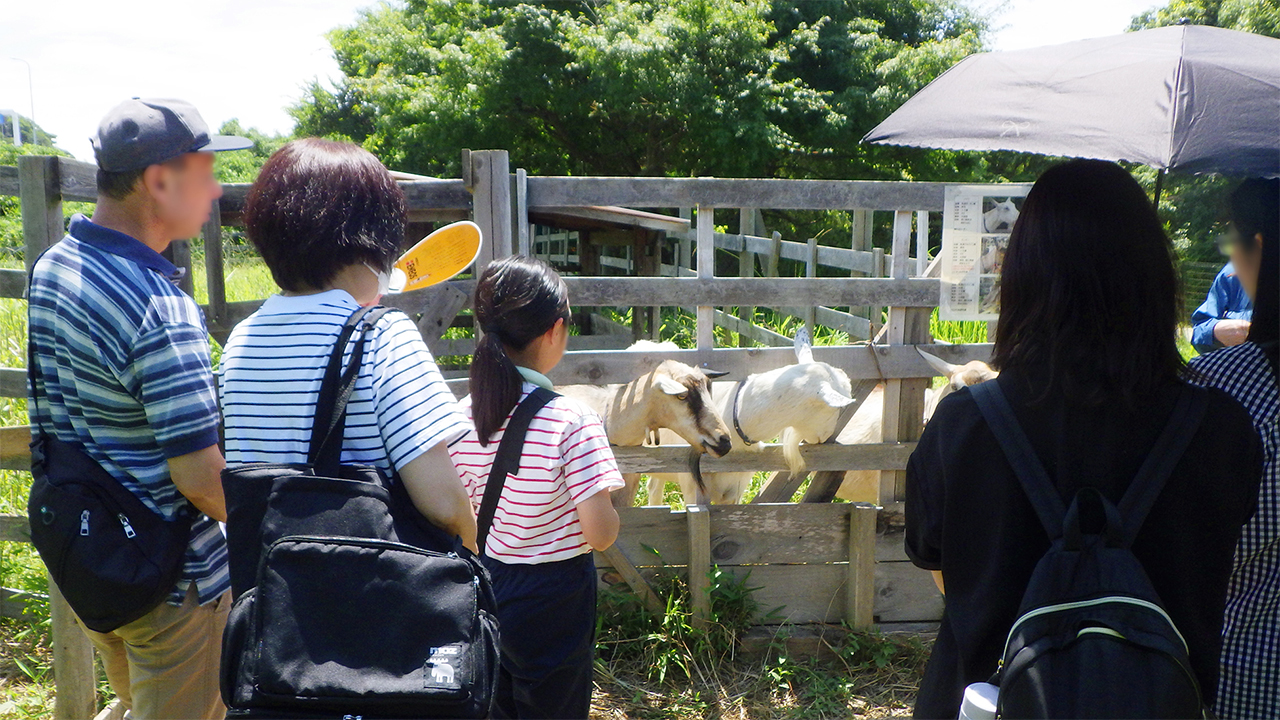
・Interaction with the goat weeding team
・Making of secret forest base, which children can enjoy
・Shouting match where people can shout as loud as they want, among other activities
In particular, the goat weeding team is very popular. Instead of using herbicides, we adopt an environmentally friendly weeding method where goats eat grass and weeds, serving as a rare opportunity for children to interact with goats.
Environmental Conservation Activities Recognized Through Official Certifications
The environmental conservation activities of the Negishi Refinery have been certified by various agencies in Japan and overseas.
Attainment of ABINC Certification (February 2020)
This is a Japanese certification scheme established by the Association for Business Innovation in harmony with Nature and Community that shows the attainment of a certain level of consideration for biodiversity at a business site. The Negishi Refinery’s formation of an ecological network and collaboration with the local community were recognized.
See here for details about ABINC certification (in Japanese)
See here for business sites with ABINC certification (in Japanese)
Nationally Certified Sustainably Managed Natural Site Certification by the Ministry of the Environment (October 2023)
The Negishi Refinery was one of the first sites certified in Japan under this new certification scheme launched by the Ministry of the Environment. The refinery’s initiatives were recognized even from the perspective of national environmental policies.
See here for details about the Nationally Certified Sustainably Managed Natural Site certification on the Ministry of the Environment’s 30by30 website (in Japanese)
OECMs Registration (August 2024)
The Negishi Refinery was registered in a world database as an Other Effective area-based Conservation Measures (OECMs) site, which refers to an area other than protected areas such as national parks that contribute to effective and long-term biodiversity conservation. This registration recognized that the refinery’s initiatives have met international standards.
Environmental Reconstruction at the Sendai Refinery
-
New Space for Environmental Activities Born from Post-Earthquake Reconstruction
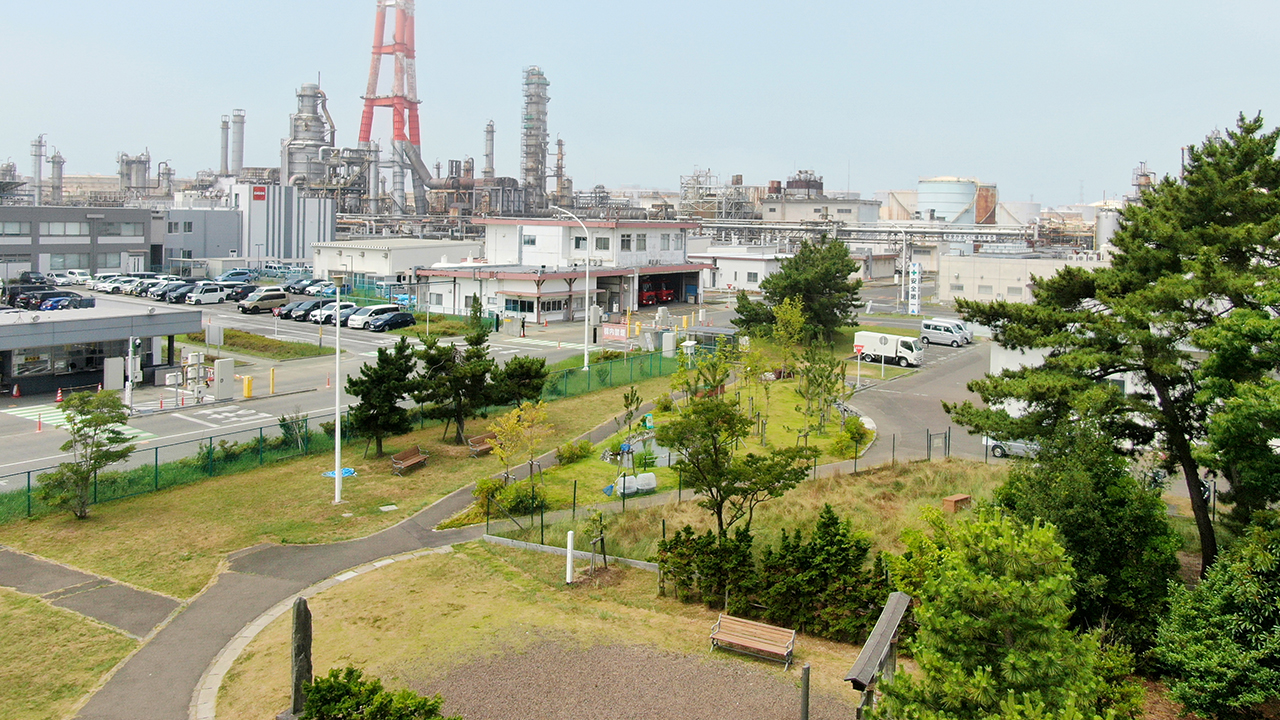
The Sendai Refinery suffered severe damage during the Great East Japan Earthquake of 2011. In the reconstruction process, facilities were rebuilt with an emphasis on coexistence with nature. At the center of this effort is the model green area established within the refinery.
This green area is a symbol of the refinery’s recovery from the earthquake. At the same time, as a place for practicing biodiversity conservation, we carried out planting centered on indigenous species of the Tohoku region and intentionally created an environment that is conducive to insects and small animals, becoming a symbol of spatial design that is friendly to ecosystems. This initiative is creating an environment that is visited by 204 species. It exemplifies the approach of resilience—to overcome disaster and rebuild into a better form—and as a company affected by the disaster, we also sought to contribute toward the recovery of the local environment.
The model green area was established as part of the refinery’s reconstruction, and it currently functions as part of the local ecological network.
Sendai Refinery (in Japanese)
-
Nature Walks to Feel Even Closer to Nature
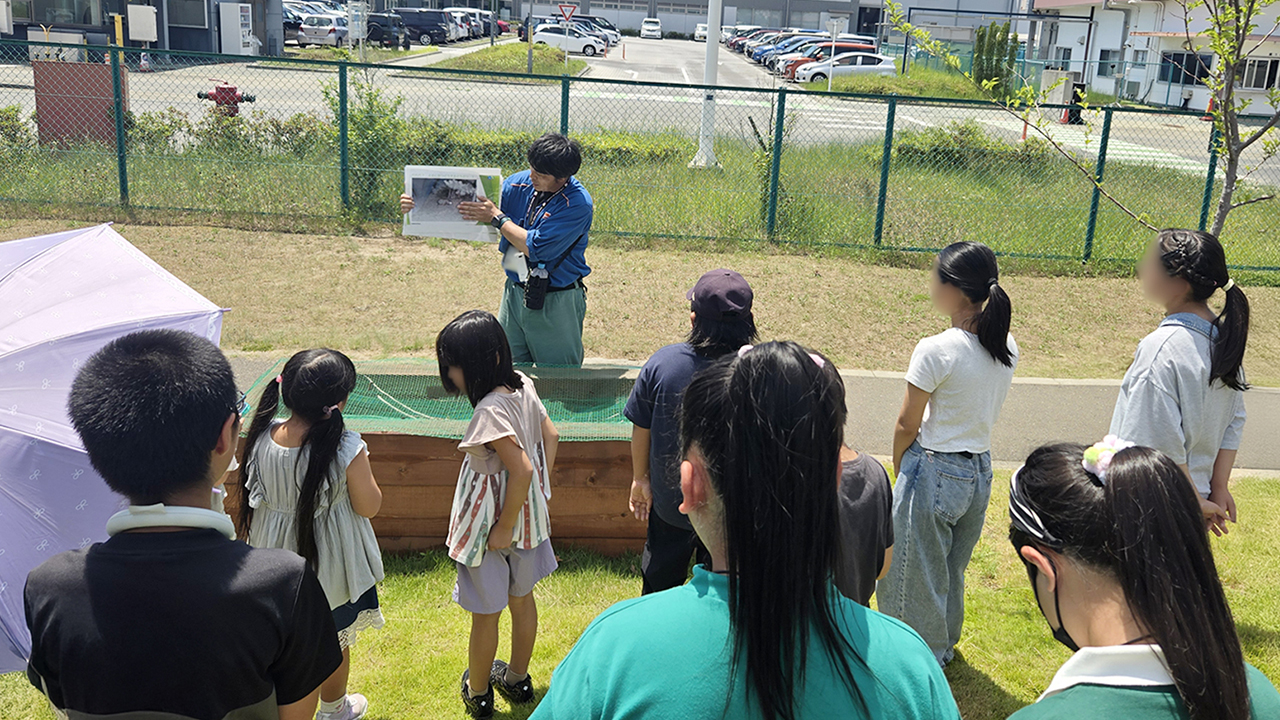
Since July 2022, nature walks have been organized at the Sendai Refinery to let employees understand the importance of the natural environment. These walks provide opportunities to learn about harmony with nature under the theme of “Thinking about biodiversity from the greenery around us.”
・Guided tour of the green area’s ecosystem by a specialist
・Plant observation and recording activities by season
・Observation of habitats of insects and small animals
・Visits to biodiversity conservation facilities such as the “Beetle Apartment” and “Insect House”
They offer a good experience where participants see small wildlife and plants they usually do not notice while walking around the refinery’s green area, with feedback such as “I was surprised that there is so much wildlife in the refinery.” At the premiere of the model green area held on September 26, 2024, we opened the newly established green area to local residents, becoming a rare opportunity to experience the natural environment of the refinery, something that is not usually seen.
-
Creation of an Environment That Develops a Diverse Ecosystem
There is a surprisingly diverse range of wildlife living in the green area of the Sendai Refinery. They include Japanese raccoon dogs, foxes, and other mammals, swallows and other birds, as well as a variety of insects. Two initiatives are being undertaken at the refinery to further expand this diverse ecosystem.
One is the creation of a waterside environment. By creating small ponds and wetlands, we welcome waterside creatures such as frogs and dragonflies. Another is the creation of insect habitats that we call the “Beetle Apartment” and “Insect House.” Tree stumps and rotting logs function as habitats for various insects such as the Japanese rhinoceros beetle and stag beetle.
-
Achievements and Certification of Environmental Activities
Attainment of ABINC Certification (February 2025)
The refinery has attained ABINC certification. The environmental conservation activities of the Sendai Refinery, undertaken after recovering from the earthquake, were objectively recognized by a third-party agency.
Prospects for a Sustainable Future
Continuation and Expansion of Biodiversity Conservation
ⅰ)At the Negishi Refinery, we will enhance the added value of biodiversity based on the plan to protect rare species and establish habitats for them.
ⅱ)At the Sendai Refinery, we will further improve the potential of the refinery’s green area toward attainment of OECMs certification.
ⅲ)Through regular monitoring, we will understand the changes in ecosystems and implement appropriate management.
Strengthening of Collaboration with Local Communities
ⅰ)We will further deepen our collaboration with local residents and educational institutions and enhance our ability to provide locations for environmental education and learning.
ⅱ)We will enhance the scope of events such as ENE-Mori Fair and children’s tours and increase the number of participants.
ⅲ)We will strengthen our role as part of the local ecological network.
Spread of Environmental Awareness Within and Outside the ENEOS Group
ⅰ)We will increase environmental awareness within the ENEOS Group through nature walks and events for employees.
ⅱ)We will disseminate information by producing educational materials such as a biodiversity handbook.
ⅲ)We will introduce our initiatives using digital signage.
Contribution to Sustainability Targets
ⅰ)We will continue to contribute toward achieving the 30by30 target.
ⅱ)We will maintain ABINC certification. (The Negishi Refinery is scheduled for renewal in February 2026 and the Sendai Refinery in February 2028.)
ⅲ)We will maintain Nationally Certified Sustainably Managed Natural Site certification. (The Sendai Refinery is seeking to attain certification within FY2026, while the Negishi Refinery is scheduled to renew certification by October 2028.)
In this way, the biodiversity initiatives at the ENEOS Group’s refineries do not stop at environmental conservation. They also have a multi-faceted significance in terms of coexisting with local communities, providing opportunities for environmental education, and contributing toward international environmental targets. They are excellent examples showing that, even in an environment such as petrochemical industrial complexes in coastal areas, it is possible to develop a diverse ecosystem and contribute to local communities through proper management and continuous efforts.


