The Future Pioneered by ENEOS: Advanced Projects & Procurement Management in the ENEOS Group
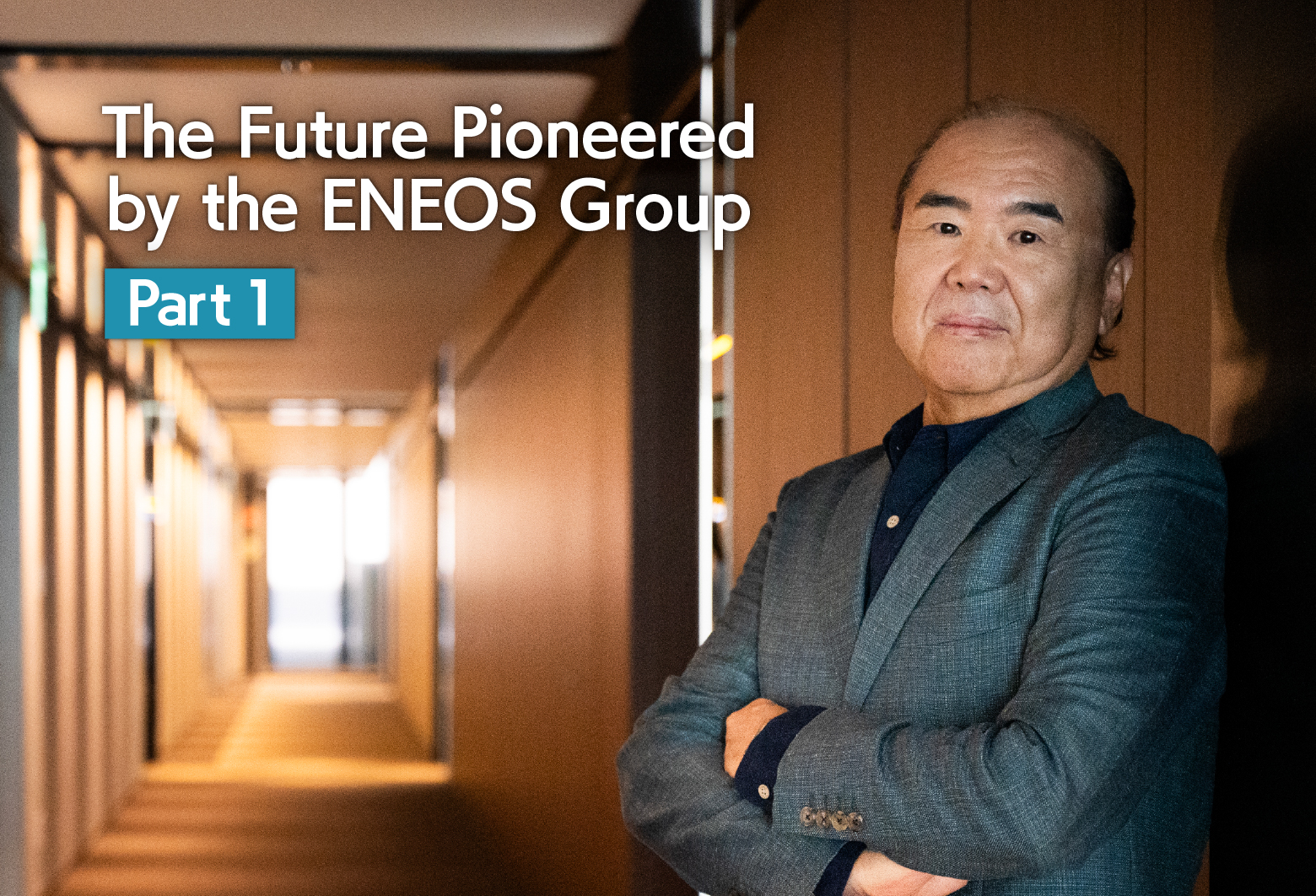
The ENEOS Group is working to quickly improve investment efficiency as it aims to transform its management into a leaner structure capable of flexibly adapting to a non-continuous business environment. It is accelerating investments in large-scale energy plants and other projects, while also rigorously verifying the profitability of these projects and reconsidering less efficient ones. In this three-part series, we asked Someya Yoshiyuki, Chief Project and Procurement Officer (CPPO) who spearheads project management and procurement, about the advancement of Group-wide management, including the project gate system and procurement networks.
Part 1: The ENEOS Group’s Initiatives to Improve Investment Efficiency
Enhance our competitiveness by reducing inefficient projects and implementing strategic procurement
――The title CPPO is quite rare. What role do you play within the ENEOS Group?
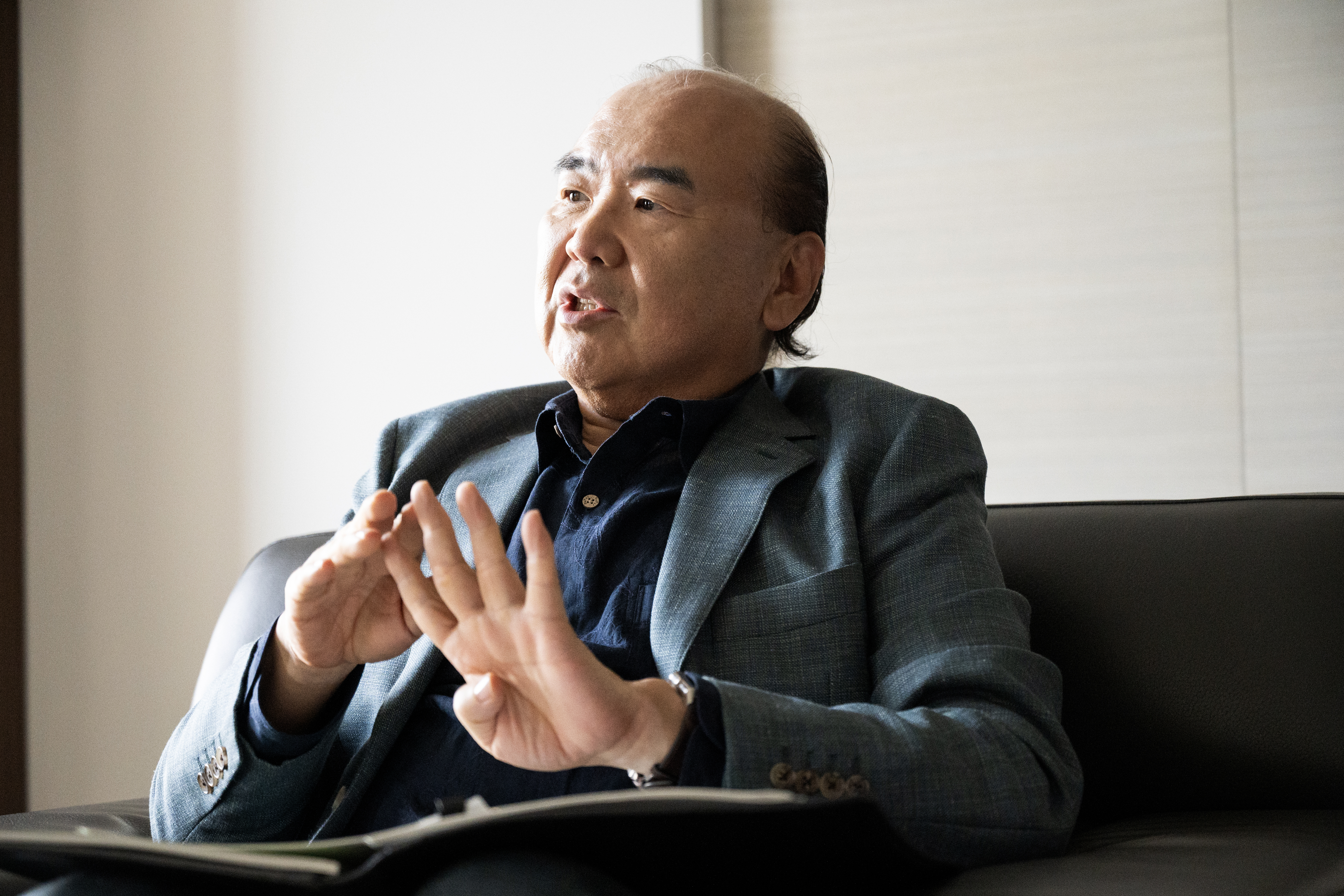
Someya: CPOs such as Chief Product Officers, Chief Project Officers, or Chief Procurement Officers have become increasingly common these days, but CPPO is certainly not a term that you hear very often. I am a Chief Project and Procurement Officer (CPPO), holding both the Chief Project Officer and Chief Procurement Officer roles. There are currently five major operating companies within the ENEOS Group, each managing their own projects and procurement independently. My role is to introduce common standards across these companies and create a structure that enables greater synergy as a Group. In the ENEOS Group, each company operates in highly specialized fields. My goal is to leverage the unique strengths of each company while optimizing the Group as a whole.
――You were appointed as the Group’s first CPPO in August 2024. Why is the ENEOS Group introducing new CxOs* like the CPPO?
Someya: A close look at past ENEOS Group projects revealed numerous instances of inefficient projects, such as those incurring impairment losses or achieving internal rates of return (IRR) that were lower than planned. Given the enormous amount of money being invested in projects across the entire Group, we cannot strengthen the Group’s competitiveness unless we quickly improve this situation. President Miyata of ENEOS Holdings has also explicitly stated the need to improve the Group’s investment efficiency, and it is under his directive that I have taken on this role.
*CxO: Collectively refers to the various C-level positions within a company, encompassing a wide range of senior executive roles.
――What exactly does project management entail?
Someya: A project, simply put, is an activity that involves investing resources such as funds, human resources, and land for a specific purpose with the aim of achieving its goals by a set deadline. Within the ENEOS Group, I am primarily responsible for capital investment projects. These include projects at ENEOS and ENEOS Materials to enhance production capacity by modifying refinery and plant equipment; projects at ENEOS Xplora to develop liquefied natural gas (LNG); projects at ENEOS Power to construct power plants; and projects at ENEOS Renewable Energy to build renewable energy generation facilities like solar and wind power plants. I also participate in M&A projects as a reviewer from a project management perspective. The larger the project, the more likely the initial assumptions—such as product prices, volumes, and profitability—will change. Furthermore, initial assumptions may need to be revised based on maintenance, operational, or safety considerations. The challenge lies in keeping projects within their planned budgets and schedules despite these circumstances evolving over time. However, without sound budget and schedule management, objectives can deviate from initial decisions, requiring course corrections. This also leads to an increase in projects with low investment efficiency, as I mentioned earlier. Our mission is to prevent such things from happening through management, and the rules governing this are the project management system and the gate system.
――Looking at the ENEOS Group as a whole, there must be a considerable number of ongoing projects. What is the budget scale for each project?
Someya: Some projects are planned and carried through to completion, while others are terminated along the way. If you count projects in their initial stages, the total number across the entire Group is quite substantial. As the CPPO for ENEOS Holdings, I am directly involved in projects exceeding 10 billion yen.
Of course, even for projects under 10 billion yen, I ensure that proper governance is maintained for the ENEOS Group according to their value.
――What exactly does your role as the procurement officer involve?
Someya: When you hear the word “procurement,” you probably imagine things like purchasing raw materials and supplies or handling payments. However, if procurement isn’t managed effectively, it can impact the profitability of the Group. Procurement is a process where money goes out, so buying good products at fair prices and in an optimized manner contributes to the company’s operations. For example, reducing costs by 10 billion yen through effective procurement is far less challenging than achieving 10 billion yen in profits. From this perspective, we believe that optimizing procurement is a strategic element that raises the company’s competitiveness. That said, if problems arise due to procuring cheap but poor-quality goods, it can end up being a costly purchase. The key is how to buy at a fair price while ensuring the quality of products and services. Prices also vary depending on specifications and purchasing methods. Therefore, as the person in charge of procurement, I help optimize specifications and the procurement environment, for instance by leveraging bidding processes where possible. For high-cost purchases, we draw up a procurement plan and finalize decisions in consultation with the business department. We are working to build win-win relationships with our suppliers to ensure stable, sustainable procurement in the long term.
――What do you keep in mind when performing your duties as a CPPO?
Someya: Projects are about involving many people, which makes communication among stakeholders extremely important. Projects are often likened to a voyage. This is because everyone must be working as one team, all facing the same direction. The first step in a project is developing the project plan. We focus our efforts on building an alliance where everyone shares this plan as a common understanding and works together to achieve the goal.
――It is important not only to manage budgets and schedules, but also to maintain good communication when managing projects. Next time, we will discuss project execution methods and governance.
■ Summary
This article explained the background behind the creation of the ENEOS Group’s new CxO—the CPPO—and the role that the CPPO plays. It also discussed what project management entails and the importance of procurement operations. The next part will introduce specific details of project and procurement management. Don’t miss it.
→Continued in Part 2: The Future Pioneered by ENEOS: Advanced Projects & Procurement Management in the ENEOS Group | ENEOSWAYS | ENEOS Holdings


Related Posts
The ENEOS Group is working to quickly improve investment efficiency as it aims to transform its management into a leaner structure capable of flexibly adapting to a non-continuous business environment. It is accelerating investments in large-scale energy plants and other projects, while also rigorously verifying the profitability of these projects and reconsidering less efficient ones. In this three-part series, we asked Someya Yoshiyuki, Chief Project and Procurement Officer (CPPO) who spearheads project management and procurement, about the advancement of Group-wide management, including the project gate system and procurement networks.
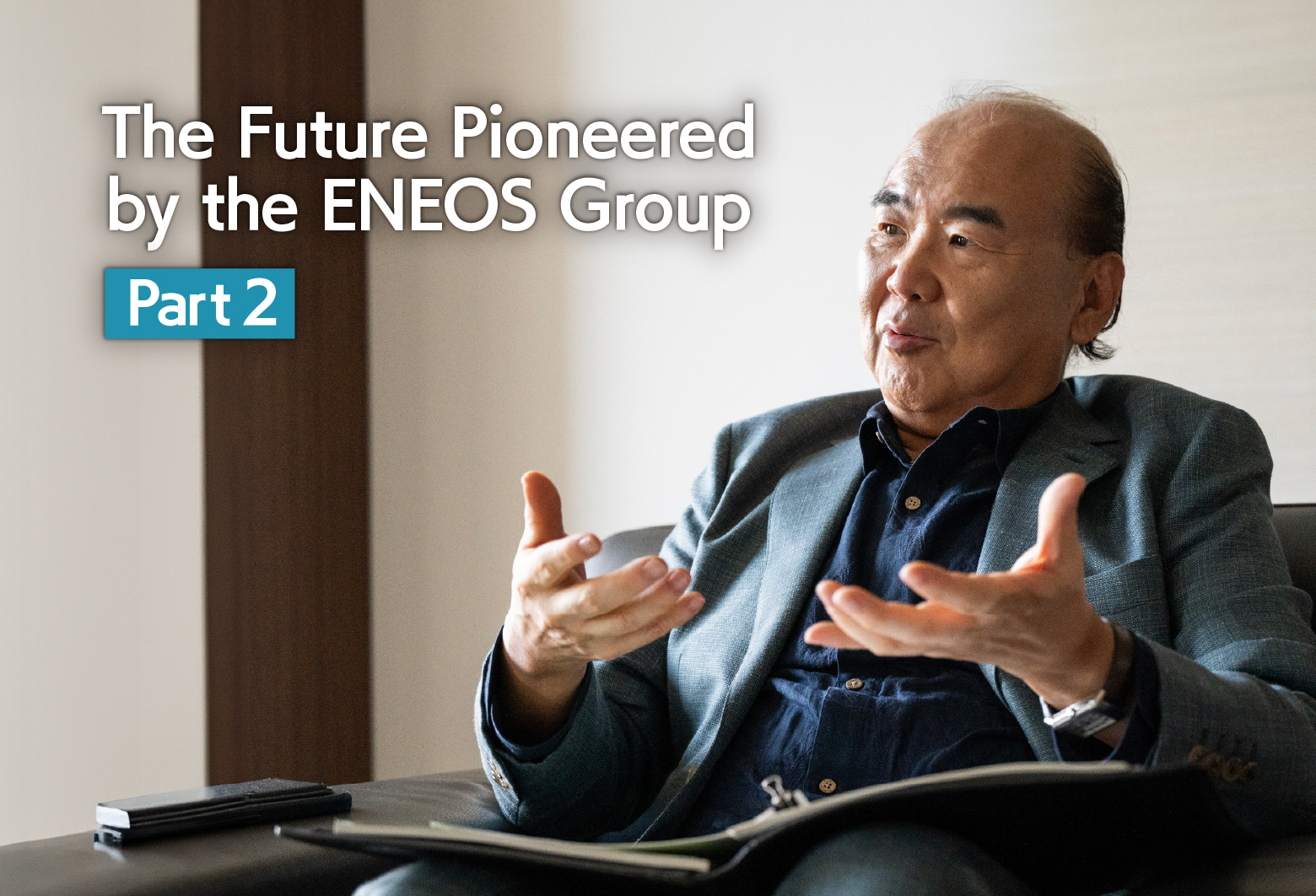
The ENEOS Group is working to quickly improve investment efficiency as it aims to transform its management into a leaner structure capable of flexibly adapting to a non-continuous business environment. It is accelerating investments in large-scale energy plants and other projects, while also rigorously verifying the profitability of these projects and reconsidering less efficient ones. In this three-part series, we asked Someya Yoshiyuki, Chief Project and Procurement Officer (CPPO) who spearheads project management and procurement, about the advancement of Group-wide management, including the project gate system and procurement networks.